
Analyse & Territoires

Regard sur les dynamiques du monde contemporain

Analyse & Territoires publie des analyses, des notes de politique publique et des tribunes sur les transformations du monde contemporain rigoureuses, indépendantes, accessibles à tous.

Ameyo DOTCHE

Ameyo DOTCHE

Analyst, writer, and editor

En savoir plus

Analyse

Resource Extraction at Any Cost, at What Price?

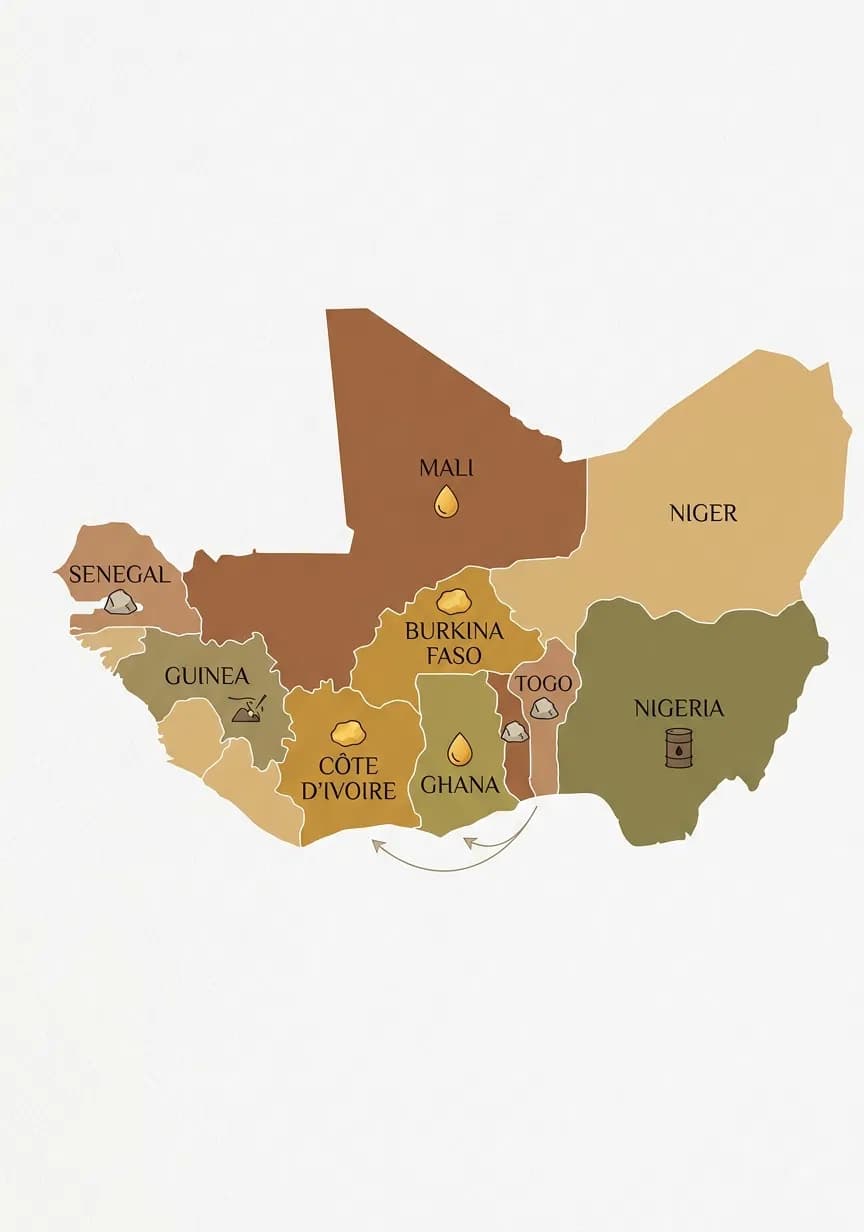
Between informal artisanal gold mining and legally permitted extraction of sand, phosphate, or oil, West Africa faces the same underlying reality under two opposing legal regimes: polluted soil and water, sickened local populations, and a rural exodus, both cross-border and internal, driven by the lack of formal employment. This exodus fragments the families left behind, while the mining territories themselves suffer lasting environmental degradation. The article argues that an operation's legality reduces neither its human nor its environmental cost, it merely shifts where accountability falls, a question West African states have so far struggled to answer.

Analyse

L'exploitation des ressources à tout prix, pour quel prix ?

Entre orpaillage artisanal informel et exploitations légales du sable, du phosphate ou du pétrole, l'Afrique de l'Ouest fait face à une même réalité sous deux régimes juridiques opposés : pollution des sols et des eaux, populations riveraines rendues malades, et un exode rural, transfrontalier ou interne, alimenté par le manque d'emploi formel. Cet exode fragmente les familles restées derrière, tandis que les territoires miniers eux-mêmes subissent une dégradation environnementale durable. L'article montre que la légalité d'une exploitation ne réduit ni son coût humain ni son coût environnemental, elle ne fait que déplacer la question de la responsabilité, sans que les États de la région parviennent, jusqu'ici, à y répondre efficacement.
Analyse

Resource Extraction at Any Cost, at What Price?

Between informal artisanal gold mining and legally permitted extraction of natural resource, Africa faces the same underlying reality under two opposing legal regimes: polluted soil and water, sickened local populations, and a rural exodus, both cross-border and internal, driven by the lack of formal employment. This exodus fragments the families left behind, while the mining territories themselves suffer lasting environmental degradation. The article argues that an operation's legality reduces neither its human nor its environmental cost, it merely shifts where accountability falls, a question West African states have so far struggled to answer.

Analyse

L’exploitation des ressources à tout prix, pour quel prix ?

Entre orpaillage artisanal informel et exploitations légales des ressources naturelles, l'Afrique fait face à une même réalité sous deux régimes juridiques opposés : pollution des sols et des eaux, populations riveraines rendues malades, et un exode rural, transfrontalier ou interne, alimenté par le manque d'emploi formel. Cet exode fragmente les familles restées derrière, tandis que les territoires miniers eux-mêmes subissent une dégradation environnementale durable. L'article montre que la légalité d'une exploitation ne réduit ni son coût humain ni son coût environnemental, elle ne fait que déplacer la question de la responsabilité, sans que les États de la région parviennent, jusqu'ici, à y répondre efficacement.

Analyse

Civil registration in Africa: the missing link in security, development and sovereignty

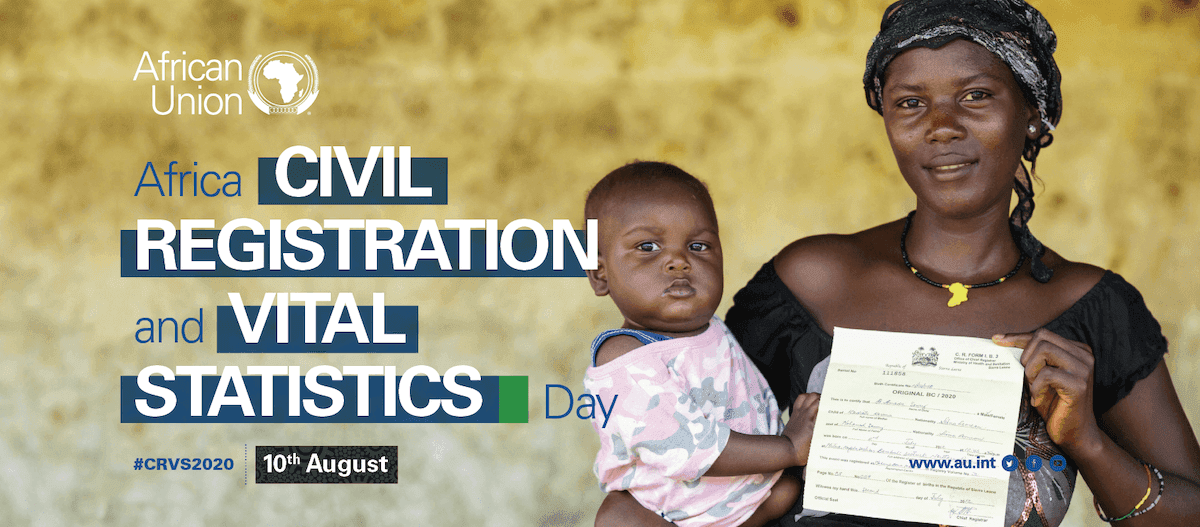
In sub-Saharan Africa, tens of millions of people do not exist administratively. This legal invisibility is not merely a bureaucratic matter: it is a security vulnerability, a democratic fracture, a gender inequality and an obstacle to development. At a time when the continent is set to host one third of all global births by 2050, civil registration remains the most neglected link in African public policy.

Plus d'articles

Analyse29 juin 2026

After Nairobi and the AFD freeze: can France maintain its role in Africa without its soft power instruments?

The freeze on AFD credits since June 16, 2026 reveals a deep tension between the diplomatic ambitions France displayed in Nairobi and the means actually deployed. Beyond international solidarity, it is French national interest itself that is at stake: economic influence, employment for young graduates, normative leverage. Combined with the rise in tuition fees for foreign students, this withdrawal raises an unresolved strategic question deliberate rupture or constrained adjustment at a time when other powers are consolidating their presence across the African continent.

Analyse29 juin 2026

The Abidjan-Lagos Corridor: when infrastructure becomes a risk market

In December 2025, the Board of Directors of the Abidjan-Lagos Corridor Management Authority, ALCoMA, was sworn in in Abidjan, marking the project’s official entry into its operational phase. Behind this institutional act lies one of the most ambitious undertakings in West African integration: 1,028 kilometres of supranational infrastructure linking Côte d’Ivoire to Nigeria through Ghana, Togo and Benin, connecting eight major ports and concentrating 75% of ECOWAS regional trade, with a total investment of 15 billion dollars. Works will proceed in phases: critical urban bypasses between 2027 and 2030, main segments between 2028 and 2033, border post installations between 2029 and 2032, with full operational capacity expected by 2033. This corridor is not simply a highway. It is a junction between international maritime flows and regional overland trade, a space of accelerated circulation of goods, people and risks. The central analytical question is this: who structures, who covers, and who regulates these risks? That is what this note sets out to answer.

Analyse29 juin 2026

Post-electoral Benin: sovereign credit resilience, regulatory risks for FDI and trade dynamics in West Africa

Benin’s presidential election of April 12, 2026 delivered a predictable but structurally significant result. Romuald Wadagni, former Minister of Economy and Finance and designated successor to outgoing President Patrice Talon, won 94% of votes according to Jeune Afrique, in a contest defined less by electoral competition than by institutional continuity. For sovereign risk analysts and trade finance underwriters, the central question is not whether Wadagni would win that was never in doubt but whether this transition preserves, deepens or quietly disrupts the macroeconomic architecture that has made Benin one of West Africa’s most credible sovereign borrowers over the past decade. The answer matters because Benin sits at the intersection of three strategic risk vectors: sovereign debt management in a post-IMF programme environment, foreign direct investment protection in a tightly controlled political economy, and the continuity of regional trade in a fractured ECOWAS space. Each of these vectors presents both opportunities and exposures for institutional insurers and trade finance providers operating in the sub-region.

Analyse29 juin 2026

Dictatorship in Africa: a profitable market for spyware, hacking and arms vendors?

In several African capitals, the security budget grows faster than those for education or health. This is not an accounting accident it reflects a reality that official figures struggle to name. Governments that no longer derive their legitimacy from popular consent need, in order to survive, to see without being seen, to hear without being heard, and sometimes to strike without leaving traces. This silent but structural demand has produced a discreet, technically sophisticated, diplomatically protected and extraordinarily profitable market. States specialising in the security industry have understood that African political instability and poor governance are not only a geopolitical problem they are also a commercial opportunity. This article examines the mechanics of this market, its diplomatic relays, its effects on public budgets and on civil liberties.

Analyse29 juin 2026

Corridor Abidjan-Lagos : quand l’infrastructure devient un marché de risques

En décembre 2025, le Conseil d’administration de l’Autorité de Gestion du Corridor Abidjan-Lagos, ALCoMA, prêtait serment à Abidjan, marquant l’entrée officielle du projet dans sa phase opérationnelle. Derrière cet acte institutionnel se profile l’un des chantiers les plus ambitieux de l’intégration ouest-africaine : 1 028 kilomètres d’infrastructure supranationale reliant la Côte d’Ivoire au Nigeria en passant par le Ghana, le Togo et le Bénin, connectant huit ports majeurs et concentrant 75% du commerce régional de la CEDEAO, pour un investissement total de 15 milliards de dollars. Les travaux se dérouleront en phases : contournements urbains critiques entre 2027 et 2030, segments principaux entre 2028 et 2033, installations aux postes frontières entre 2029 et 2032, pour une capacité opérationnelle complète attendue en 2033. Ce corridor n’est pas seulement une autoroute. C’est une jonction entre flux maritimes internationaux et commerce terrestre régional, un espace de circulation accélérée des biens, des personnes et des risques. La question analytique centrale est la suivante : qui structure, qui couvre et qui régule ces risques ?

Analyse29 juin 2026

Bénin post-électoral : résilience du crédit souverain, risques réglementaires pour l’IDE et dynamiques commerciales en Afrique de l’Ouest

L’élection présidentielle béninoise du 12 avril 2026 a livré un résultat prévisible mais structurellement significatif. Romuald Wadagni, ancien ministre de l’Économie et des Finances et successeur désigné du président sortant Patrice Talon, a remporté 94% des suffrages selon Jeune Afrique dans un scrutin défini moins par la compétition électorale que par la continuité institutionnelle. Pour les analystes du risque souverain et les souscripteurs de financements commerciaux, la question centrale n’est pas de savoir si Wadagni allait gagner cela ne faisait aucun doute mais si cette transition préserve, approfondit ou perturbe discrètement l’architecture macroéconomique qui a fait du Bénin l’un des emprunteurs souverains les plus crédibles d’Afrique de l’Ouest au cours de la dernière décennie. La réponse importe parce que le Bénin se situe à l’intersection de trois vecteurs de risque stratégiques : la gestion de la dette souveraine dans un environnement post-programme FMI, la protection des investissements directs étrangers dans une économie politique étroitement contrôlée, et la continuité des échanges régionaux dans un espace CEDEAO fracturé. Chacun de ces vecteurs présente à la fois des opportunités et des expositions pour les assureurs institutionnels et les prestataires de financement du commerce opérant dans la sous-région.

Analyse29 juin 2026

L’état civil en Afrique : le chaînon manquant de la sécurité, du développement et de la souveraineté

En Afrique subsaharienne, des dizaines de millions de personnes n’existent pas administrativement. Cette invisibilité juridique n’est pas seulement une question bureaucratique : elle est une faille sécuritaire, une fracture démocratique, une inégalité de genre et un obstacle au développement. À l’heure où le continent s’apprête à abriter un tiers des naissances mondiales d’ici 2050, l’état civil demeure le chaînon le plus négligé des politiques publiques africaines.

Analyse11 juin 2026

The Economics of War and Peace: What West Africa Is Really Paying

The Sahelian war economy benefits organized actors who have no interest in peace. Illicit trafficking, road blockades, money laundering while states pour into armaments the funds that should be building schools, roads, and public services, enriching in the process an arms industry that also thrives on instability. A labyrinthine cycle, or a Pandora's box? Perhaps both at once.

Analyse11 juin 2026

Économie de la guerre, économie de la paix : ce que l’Afrique de l’Ouest paie réellement

L'économie de guerre sahélienne profite à des acteurs organisés qui n'ont aucun intérêt à la paix. Trafics illicites, blocus routiers, blanchiment d'argent pendant que les États engloutissent dans l'armement des fonds qui devraient construire des écoles, des routes et des services publics, enrichissant au passage une industrie de l'armement qui prospère elle aussi sur l'instabilité. Un cycle labyrinthe, ou une boîte de Pandore? Ou les deux à la fois ?

Analyse30 avril 2026

Security Crisis in Mali: Territory, Alliances and Fragmented Sovereignty

The coordinated attacks of April 25, 2026 in Mali, jointly carried out by JNIM and the Azawad Liberation Front against Bamako, Kati, and several strategic cities, mark a major turning point in Mali’s security crisis and raise serious questions about the viability of the military strategy pursued by the junta and its Russian partners since 2021. The crisis is rooted in a long history of fragmented sovereignty and complex identity reconfigurations, where separatist and jihadist alliances are shaped more by tactical calculations than ideological convergence, producing consequences that extend far beyond Mali’s borders. To what extent do the states of the Sahel and the West African coastal region still possess the institutional and operational resources necessary to respond collectively to a threat whose very nature is transnational?

Analyse22 mai 2026

The Geopolitics of Gender and Land Governance in West Africa: Between Legislative Reform and Ground Realities

Women produce the majority of the food consumed across West Africa, yet they continue to face a contradiction that decades of legal reforms have failed to resolve: their contribution to agricultural production is central, while their control over land remains marginal. Across almost all countries in the sub-region, women own only a tiny fraction of registered land ranging from 1% in Senegal to 11% in Côte d’Ivoire, according to FAO and World Bank data. This policy brief examines the political and institutional drivers of this contradiction, analyzes documented cases of land reform in Côte d’Ivoire and Senegal, and proposes recommendations for regional and national policymakers.

Analyse2 juin 2026

Tension at the Top of the Senegalese State: When Current Affairs Shape Financial Markets

From Bassirou Diomaye Faye’s historic first-round victory in March 2024, through the early tensions surrounding the management of state affairs, the replacement of the presidential spokesperson, the confrontation in the National Assembly over political funds, and up to the dismissal of Ousmane Sonko on 22 May 2026, the new Senegalese government has faced, from the moment it took office, a crisis that has gradually deepened at the highest level of the state, slowing public action at a time when the country could not afford inertia. But beyond the political noise and the narratives of betrayal or courage that have saturated the media space, one question remains insufficiently asked: what does this actually imply for the Senegalese people? For investors observing the trajectory of a country redefining its place in the regional economy? For the debts that must be honoured?

Analyse4 juin 2026

Religion, the Opium of the People: A Two-Sided Phenomenon?

The famous Marxist diagnosis that “religion is the opium of the people” has crossed two centuries without losing its analytical depth. Is it, however, a definitive truth about the religious phenomenon?

Analyse4 juin 2026

La religion, l’opium du peuple : une pièce à double face?

Le célèbre diagnostic de Marx qu’est « la religion comme opium du peuple » a traversé deux siècles sans perdre de sa densité analytique. S’agit il là d’une vérité définitive sur le fait religieux?

Analyse2 juin 2026

Tension au sommet de l’État sénégalais : quand l’actualité définit le marché financier

De la victoire historique de Bassirou Diomaye Faye au premier tour de mars 2024, en passant par les premières tensions autour de la gestion des affaires d'Etat, le remplacement du porte-parole présidentiel, la confrontation à l’Assemblée Nationale sur les fonds politiques, jusqu’au limogeage d’Ousmane Sonko le 22 mai 2026 : le nouveau gouvernement sénégalais a traversé, dès sa prise de pouvoir, une crise qui s’est progressivement enlisée depuis le sommet de l’État, ralentissant l’action publique à un moment où le pays ne pouvait pas se permettre l’attentisme. Mais au-delà du bruit politique et des récits de trahison ou de courage qui ont saturé l’espace médiatique, une question reste insuffisamment posée : qu’est-ce que cela implique réellement pour le peuple sénégalais ? Pour les investisseurs qui scrutaient la trajectoire d’un pays en train de redéfinir sa place dans l’économie régionale ? Pour les dettes qu’il faut honorer ?