
Two centuries after Marx, the phrase still resonates: religion is the opium of the people. Not because it closes the debate, but precisely because it is insufficient to exhaust it. Is it, then, a definitive truth about religion? Religion is indeed a two-sided phenomenon: soothing and mobilising, liberating and enslaving, a shield for the weak and a weapon for the powerful. History and particularly African contemporary experience offers the most compelling evidence of this duality.
Religion plays a role in transitional justice processes and emerges as a force of appeasement and social cohesion
It would be intellectually dishonest to reduce religion to its excesses. In societies fractured by poverty, conflict, and state absence, religion performs functions that no formal institution manages to fulfil with the same depth.
First, it acts as a regulator of impulses. Major religious traditions Islam, Christianity, Animism, Buddhism often share a common moral core: the valorisation of forgiveness and the regulation of individual and collective violence. In contexts of extreme tension, the voice of a religious leader may succeed where that of a political leader fails. In Rwanda, after the 1994 genocide, religious communities played a central role in reconciliation processes, enabling survivors and perpetrators to meet within spaces structured by faith. In Côte d’Ivoire, during the political crises of the 2000s and 2010s, imams and pastors jointly called for calm, building bridges where ethnic and political fractures seemed irreparable.
Second, religion functions as a social safety net. Mosques, churches, and grassroots religious communities ensure informal redistribution : food, healthcare, shelter, education that failing states cannot provide. In West Africa, Mouride dahiras in Senegal, Pentecostal networks in Ghana, and Catholic rural communities in Togo structure everyday solidarity that keeps millions of people out of extreme poverty.
Finally, religion is a vector of education and value transmission. Where public schooling is absent or insufficient, Qur’anic schools, catechism, and community religious education provide literacy, socialisation, and collective norms. Imperfect, yes but present.
This is how it begins to present itself as a potential instrument of subjugation and violence
The same faith that soothes can also kill. Contemporary history provides brutal evidence that should preclude any naïve interpretation.
The mechanism is well known: it is enough to convince individuals that their violence is willed by God permitted, even demanded to transform believers into soldiers and the faithful into executioners. But before that, the process often begins in social action where the state fails. Beneficiaries become indebted, loyal, and faithful to their “saviour,” initially perceived as a man of God but later elevated in their eyes to a semi-divine figure or direct representative of God, whose word becomes unquestionable and assimilated to scripture itself. Gradually, the sacralisation of violence takes root, removing it from moral scrutiny.
The indoctrinated thus find themselves in a position where divine orders cannot be questioned
In Sudan, religion was instrumentalised for genocidal purposes with chilling efficiency. The Khartoum regime framed its war in Darfur within an Islamic veneer tinged with ethnic cleansing, presenting the Janjaweed militias as agents of a higher moral order. The result: between 200,000 and 400,000 deaths according to estimates, millions displaced, and entire villages destroyed in the name of a purity never demanded by God.
In Nigeria and Cameroon, Boko Haram literally “Western education is forbidden” built its project on a radical and reductive interpretation of Islam, turning faith into a war machine against education, women, and modernity. Thousands of civilians were killed, hundreds of girls abducted, and entire communities subjected to terror in the name of a God that the vast majority of regional Muslims reject. Religion here is not the primary cause; it is the ideological covering for a project of power, economic predation, and social destruction.
In Mali and the Sahel, the Group for Support of Islam and Muslims (JNIM), affiliated with Al-Qaeda, imposes a reading of Sharia as an instrument of territorial control and population subjugation. Closure of mixed schools, bans on music, public amputations, economic blockade through road closures, and targeted assassinations of traditional leaders and local elected officials: Sharia becomes not a legal framework rooted in belief, but a tool of occupation and social fragmentation.
On a global scale, the logic behind jihadist attacks from Paris to Nairobi, Brussels to Ouagadougou—follows the same psychological architecture: persuading socially and psychologically isolated individuals that killing innocents is a supreme spiritual act. Religion is not the origin of this violence; it is its final fuel, injected into identities already weakened by marginalisation, downward mobility, and humiliation.
The same source, two uses
How can the same tradition produce both Teresa of Calcutta and inquisitors, Desmond Tutu and the Rwandan genocidaires who claimed to be Christian, Senegalese peaceful Sufis and Sahelian jihadists?
The answer does not lie in the texts themselves, but in those who read, interpret, and instrumentalise them. Every major religion contains both verses of peace and verses of war, calls for forgiveness and calls for combat. What determines which face emerges is the political, economic, and social context in which faith operates and above all, the nature of the power that controls its interpretation.
Where the state is strong, legitimate, and redistributive, religion tends to assume its natural role as a moral regulator and social bond. Where the state collapses, where youth are abandoned, and where injustice accumulates without remedy, religion becomes the only available framework of belonging and thus an easy target for those who turn it into a weapon.
This is why the response to religious extremism cannot be solely security-based or purely theological. It is primarily political and social: rebuilding the state, ensuring economic justice, strengthening critical education, and returning to faith communities the right to interpret their beliefs without having that interpretation imposed by entrepreneurs of violence.
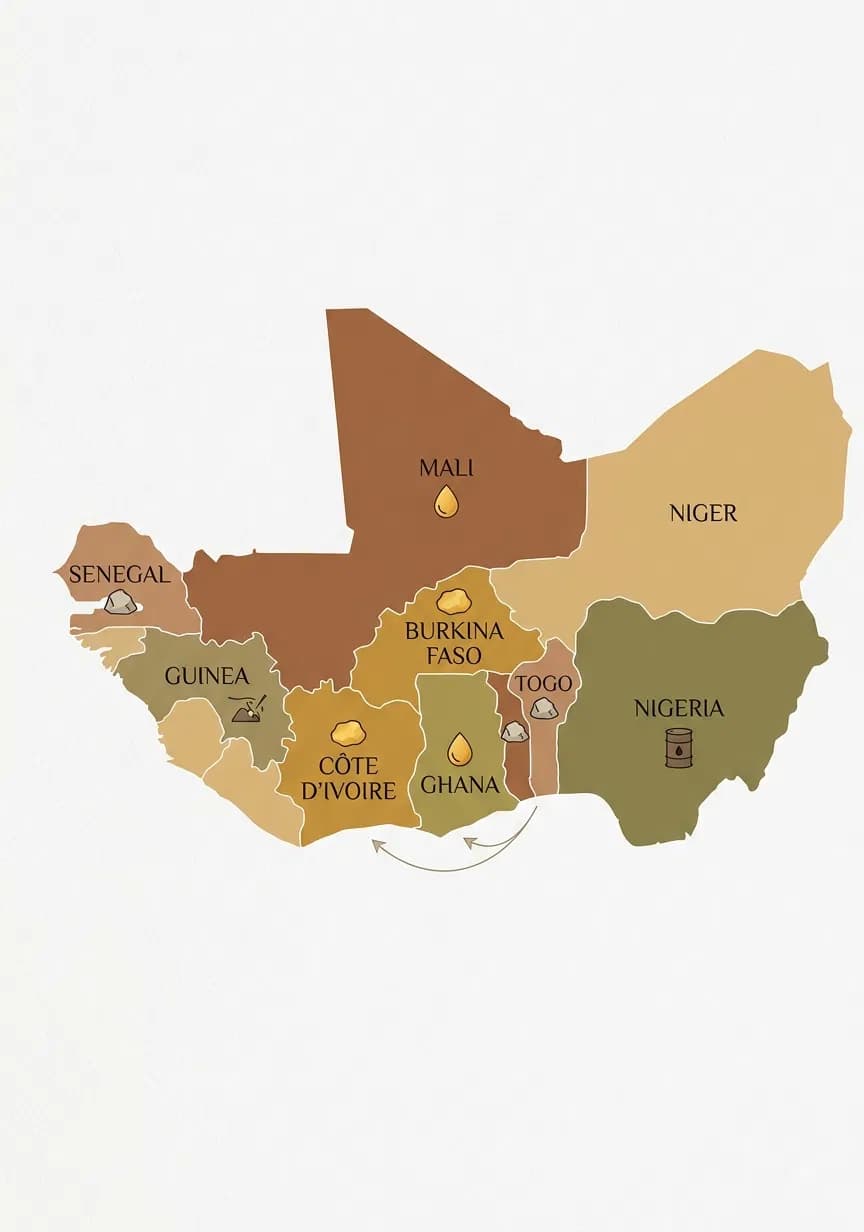
In West Africa, the tension between these two faces of religion is particularly visible and urgent. The region is one of the most religious in the world, where Islam and Christianity have coexisted for centuries with remarkable capacity for peaceful coexistence. This coexistence is a resource for peace that must be named, documented, and protected.
But the same region is now the epicentre of global jihadist expansion. The Sahel accounts for more than half of global terrorism-related deaths. And in this expansion, religion is the vehicle not the cause, but the vehicle of violence that thrives on the collapse of states and the frustrations of populations.
Clarity is required: neither demonising religion nor placing it beyond critique. The faith of West African peoples is a living, rooted, legitimate reality. At its best, it can be what it has always been: a space of dignity, solidarity, and meaning. But it will not be protected from those who seek to turn it into something else unless the economic, political, and social conditions feeding extremism are seriously addressed.
Religion is sometimes an opium that soothes, consoles, and makes the unacceptable bearable. But it is also, depending on whose hands it is in, a force acting upon the human condition either limiting or propelling action: an awakening, a form of resistance, or a bomb.

Commenter
Les commentaires sont examinés avant publication.