
Sovereign debt, market sentiment and fiscal discipline
Benin enters the Wadagni era with a solid sovereign credit profile by West African standards, though approaching a zone of structural vigilance. Moody’s maintains a B1 rating with a positive outlook, while Fitch has confirmed a B+ rating with a stable outlook. S&P assigned a BB-/B rating with a positive outlook in October 2025. These ratings reflect a decade of disciplined fiscal management under Talon, anchored by a three-year IMF programme under the Extended Credit Facility and Extended Fund Facility, which concluded in February 2026 with all quantitative performance criteria met.
The fiscal indicators are genuinely reassuring. The budget deficit was brought down to 3.1% of GDP in 2024, meeting the WAEMU convergence threshold one year ahead of the programme schedule, and the 2026 budget targets keeping it below 3%. GDP growth reached 7.5% in 2024, its highest level since 1990, with projections maintained at 7% for 2025 and 2026. The first post-inauguration fiscal signal reinforces this reading: at the Council of Ministers on June 3, 2026, the Wadagni government adopted a revised budget raised to 4,086 billion CFA francs from an initial 3,784 billion, an increase of 8%, while maintaining the growth forecast at 7.5% and announcing a 9.8% reduction in personnel expenditure. This is a signal of fiscal discipline delivered immediately upon taking office.
Two structural vulnerabilities nonetheless require close monitoring. The first concerns the upwardly revised debt stock. The IMF’s January 2026 review reclassified several loans previously transferred to public and semi-public enterprises as central government debt, bringing the public debt ratio to 60.5% of GDP in 2024 and 57.3% in 2025. Despite this revision, Benin remains classified by the IMF as being at moderate risk of debt distress. The second relates to debt structure: approximately 87% of Benin’s obligations are held by external creditors, creating exchange rate and refinancing exposure that a domestic tax revenue base representing 13 to 15% of GDP cannot easily absorb in the event of an external shock.
Wadagni’s credibility as architect of these reforms provides a guarantee of continuity. He has assembled a highly technical government team in the key public finance positions, concentrating experienced profiles across cooperation, taxation, budgeting and debt management. The sovereign credit indicator to monitor as a priority is Benin’s ability to maintain market access for its eurobond programme and regional treasury operations without the support of an IMF programme a test that begins immediately in 2026.
Contractual inviolability, FDI protection and agricultural policy
The regulatory risk profile under Wadagni is broadly favourable, though not without pressure points. Benin’s investment framework guarantees equal treatment between foreign and domestic investors, access to international arbitration and compliance with OHADA principles. The GDIZ, Glo-Djigbé Industrial Zone, is the flagship of this FDI attraction strategy. Covering 1,640 hectares near Cotonou and developed through a public-private partnership between the Beninese state and ARISE Integrated Industrial Platforms, which holds a 65% stake, the GDIZ targets the processing of cotton, cashew, pineapple, shea and soybean for export, with a projected GDP contribution of 7 billion dollars over the next decade. The Wadagni government’s agricultural policy constitutes the principal lever for securing the supply of these industrial units. Specific subsidies have been introduced for the cotton, rice, soybean and cashew sectors from the 2026-2027 agricultural season onwards, with the objective of sustainably strengthening the income of farming households, securing the supply of local processing units and consolidating Benin’s positioning as a reference agro-industrial power in West Africa. On cotton in particular, the floor target set for the 2026-2027 season is 700,000 tonnes of seed cotton, with a bonus of 10 CFA francs per kilogram paid directly to producers on volumes exceeding this threshold an incentive mechanism designed to reverse a declining trend observed over three successive seasons. These ambitions build on a solid foundation: Benin has already positioned itself as Africa’s leading cotton producer with an average of 641,000 tonnes over the past five seasons, and achieved a doubling of rice production and a tripling of soybean output over the period 2016-2025.
To secure the agricultural season in a context of international input price volatility, the state has mobilised 31.9 billion CFA francs to maintain fertiliser prices at the same subsidised levels as the previous season cotton NPK and food crop NPK remaining fixed at 17,000 CFA francs per 50 kg bag, against real market prices reaching 23,500 CFA francs and 24,250 CFA francs respectively. For a trade insurer, this measure reduces the default risk of agricultural operators within supply chains linked to the GDIZ.
On financial inclusion, Wadagni has announced the creation of a dematerialised national platform capable of disbursing credit between 50,000 and 50 million CFA francs in under 48 hours via mobile, a positive signal for SME bankability and the reduction of default risk on small commercial transactions.
The structural risk in this section is not expropriation in the conventional sense, but regulatory drift in a context of extreme power concentration. The legislative elections of January 2026 saw the two pro-Talon parties win all 109 seats in the National Assembly, leaving parliament without any opposition representation. It is, however, already an encouraging sign that the leadership has the wellbeing of the Beninese people in mind. Nonetheless, an assembly without meaningful counter-power reduces the institutional safeguards against executive modifications of fiscal policies, contractual terms or concession frameworks. For regional institutional insurers, financial guarantors or guarantee institutions, the key risk trigger is not a sudden nationalisation that scenario remains of low probability but a quiet renegotiation of PPP terms or fiscal incentives governing GDIZ concessions and Port of Cotonou expansion contracts.
Trade continuity, border risks and regional logistics
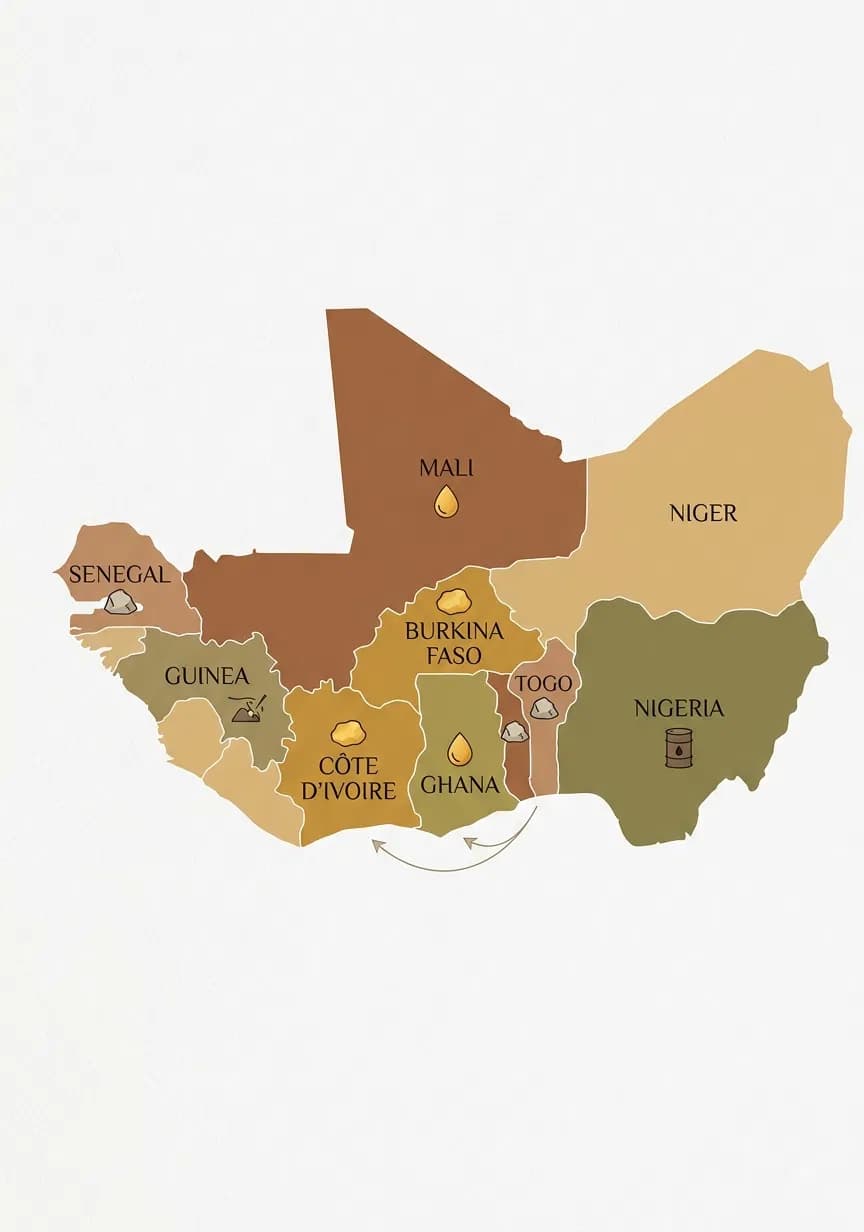
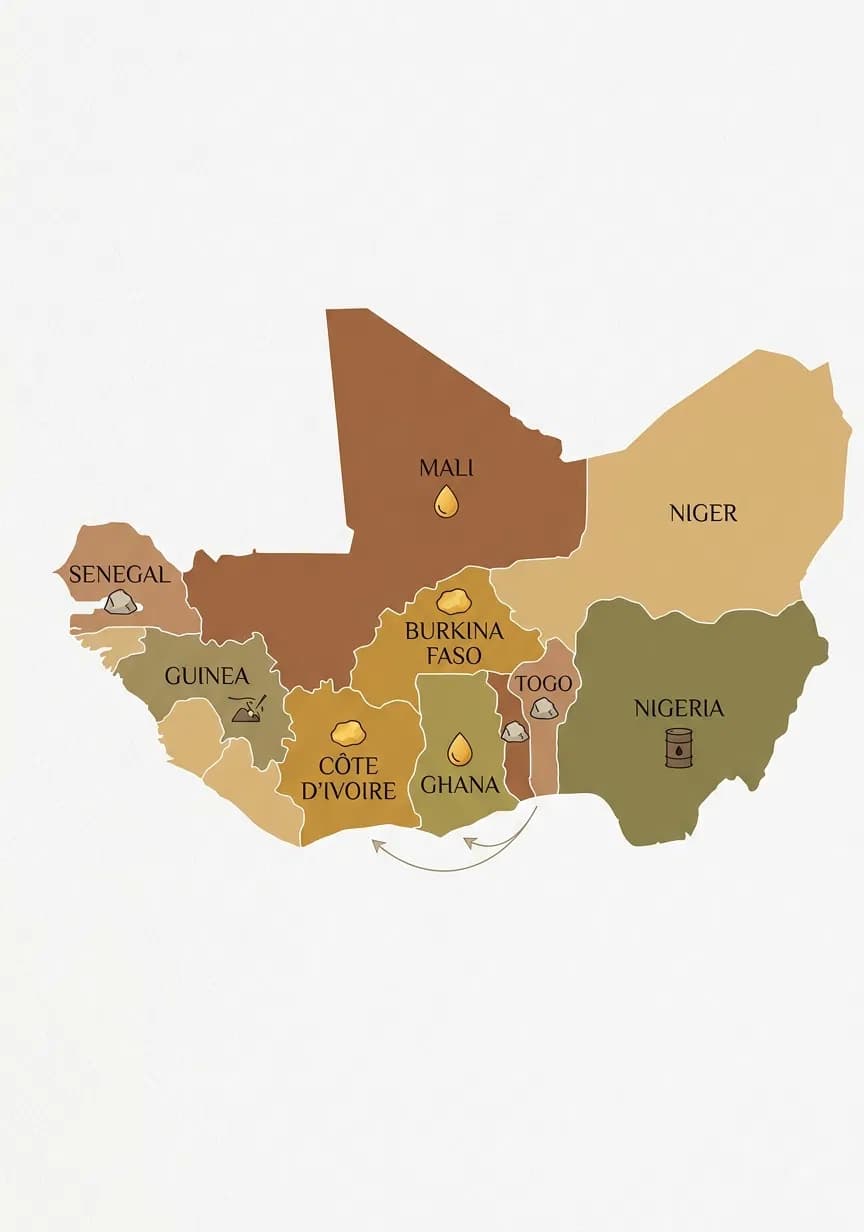
Benin’s strategic value as a transit hub for landlocked Sahelian countries constitutes both its primary economic asset and its most significant geopolitical exposure. The northern corridors Cotonou-Niamey and Cotonou-Ouagadougou have historically channelled substantial transit flows towards Niger and Burkina Faso. The withdrawal of Mali, Burkina Faso and Niger from ECOWAS to form the Alliance of Sahel States structurally complicates this relationship. Cross-border trade with Niger had progressively normalised since August 2024, and Wadagni’s first sub-regional tour after his May 24, 2026 inauguration included visits to Nigeria, Niger, Burkina Faso, Togo, Côte d’Ivoire, Senegal, Guinea-Bissau and Mali interpreted as a deliberate diplomatic signal of commercial re-engagement with both ECOWAS partners and AES states. The visit to Niger in particular rekindled hopes of a diplomatic thaw between Niamey and Cotonou.
The relationship with Nigeria remains the most consequential. The improvement of relations with Abuja under the Tinubu administration, combined with the resumption of dialogue with Niger, underpins World Bank growth projections for Benin through 2026. However, since 2021, the northern regions of Benin have faced attacks from jihadist groups affiliated with al-Qaeda, principally JNIM operating from Burkina Faso and Niger, leading to an 18% increase in the defence budget. These attacks directly threaten the Cotonou-Niamey corridor and create cargo security risks not yet integrated into the majority of trade finance instruments operating on this axis. A further indirect risk is the growing dependence of agricultural production on exports a portion of cashew production is reportedly still being exported informally to neighbouring countries, reducing local processing industries’ access to raw materials, a leakage that undermines the agro-industrial value chain the GDIZ is meant to anchor in Benin.
Risk management and underwriting recommendations
For regional institutional insurers, financial guarantors or guarantee institutions, Benin’s risk profile at mid-2026 centres on a manageable opportunity accompanied by four clearly defined vigilance triggers.
On political risk insurance, Benin remains a viable underwriting environment. The Wadagni transition represents managed continuity rather than systemic rupture, and the demonstrated sovereign willingness to honour financial obligations including a 718.8 billion CFA franc envelope dedicated to debt repayments in 2026 constitutes a credible track record. PRI coverage for transactions linked to GDIZ agro-industrial investments and Port of Cotonou modernisation projects can be maintained, with strengthened contractual protections requiring international arbitration clauses and exposure ceilings that account for the absence of effective parliamentary oversight.
On commercial credit insurance, the cotton, cashew, soybean and rice sectors under active public support constitute priority sectors. Input subsidies and production bonuses reduce agricultural operator default risk in the short term, but this protection remains conditional on the budgetary decisions of a government operating without an IMF programme. Trade credit facilities must incorporate a review clause in the event of the elimination or significant reduction of agricultural subsidies.
On northern corridors, risk pricing must explicitly incorporate cargo security risk and potential border disruptions. Facilities covering transit on the Cotonou-Niamey and Cotonou-Ouagadougou axes must include loss triggers specific to political violence and border closure.
Three indicators merit quarterly monitoring. The first is the evolution of the spread on Beninese eurobonds in the absence of an IMF programme any significant widening would signal a deterioration in market confidence in the post-programme fiscal trajectory. The second is any executive modification of the GDIZ or Port of Cotonou PPP frameworks. The third is the security situation in northern Benin any significant escalation of jihadist activity beyond the Atacora and Alibori departments would substantially alter the commercial risk profile of the country as a whole.

Commenter
Les commentaires sont examinés avant publication.