
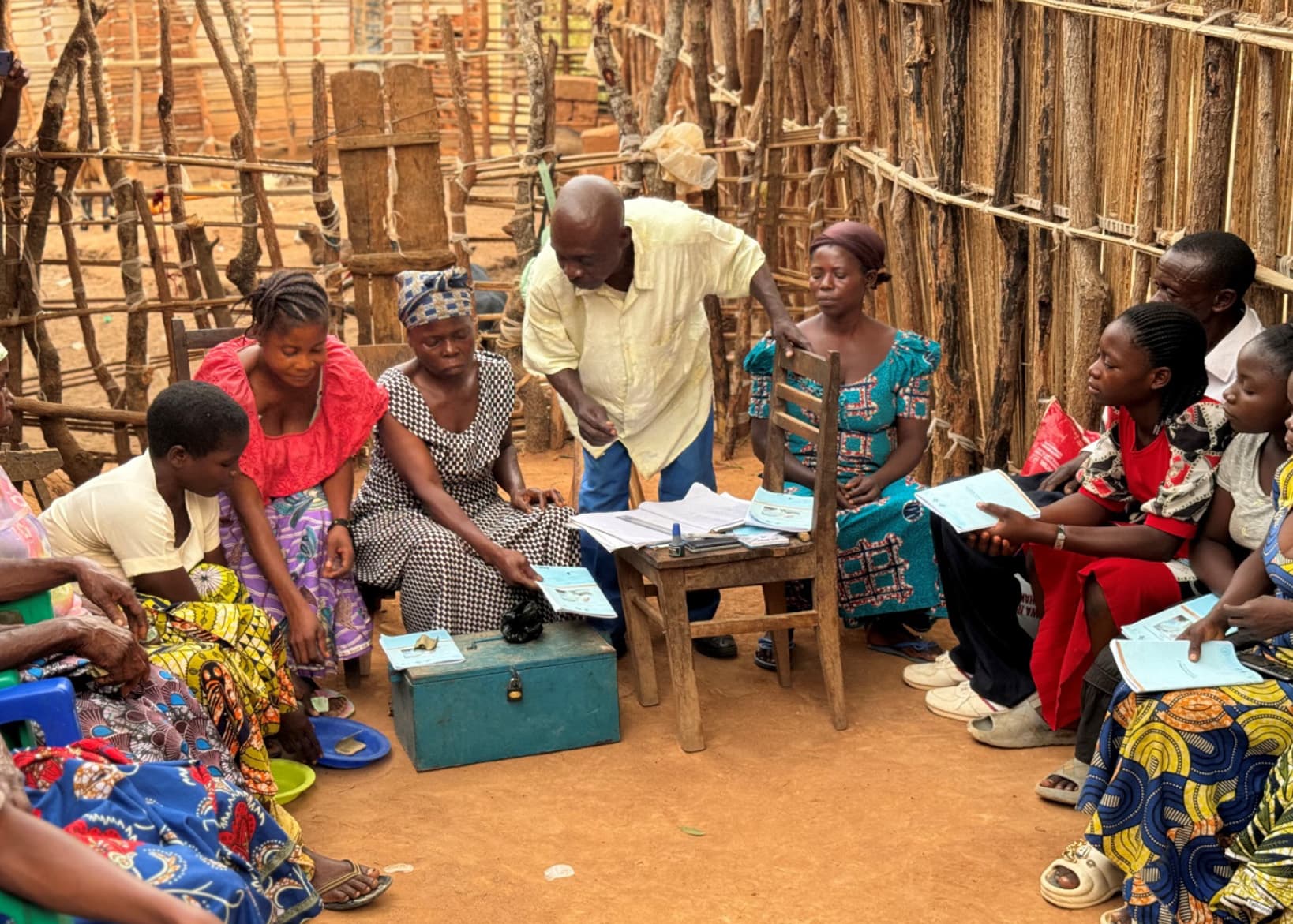
There is something I learned in the field, in rural areas, that little of the literature on governance or community security takes seriously enough. It is not external aid that arrives first when a community starts to falter. It is the fund. The small pot held by a group of women, built up week after week, sometimes just a few hundred francs at a time, which becomes, the moment things unravel, the only resource that can be mobilized within hours. But what I eventually came to understand goes beyond the question of resources alone: this fund sees crises coming before anyone else does.
I believe that local savings, whether in tontine or associative form, play a role that goes well beyond their apparent economic function, and even beyond the resilience function we usually attribute to them. They are often treated as an informal financial mechanism, useful for lack of anything better, while waiting for banks or formal microfinance to eventually cover these areas. More rarely still are they treated as what they also are: an early warning mechanism, on par with the monitoring committees that get funded and carefully mapped, except this one appears on no map at all. This partial reading strikes me as not only incomplete, but condescending toward what these structures actually accomplish.
First, local savings work because they rest on a social architecture that formal institutions take years to build, when they manage to build it at all. Trust among members, an intimate knowledge of each other’s situations, the sharing and circulation of information, the forms of support that strengthen women’s mental health, the social pressure that guarantees repayment, all of this already exists before the first franc is even collected. It is social capital that precedes financial capital, and it explains why these groups survive shocks that would collapse a mechanism imported from outside. An international organization can suspend a program overnight, depending on a funding cycle or a strategic pivot decided thousands of kilometers away. A tontine, by contrast, keeps turning for as long as the bond between the women who make it up holds.
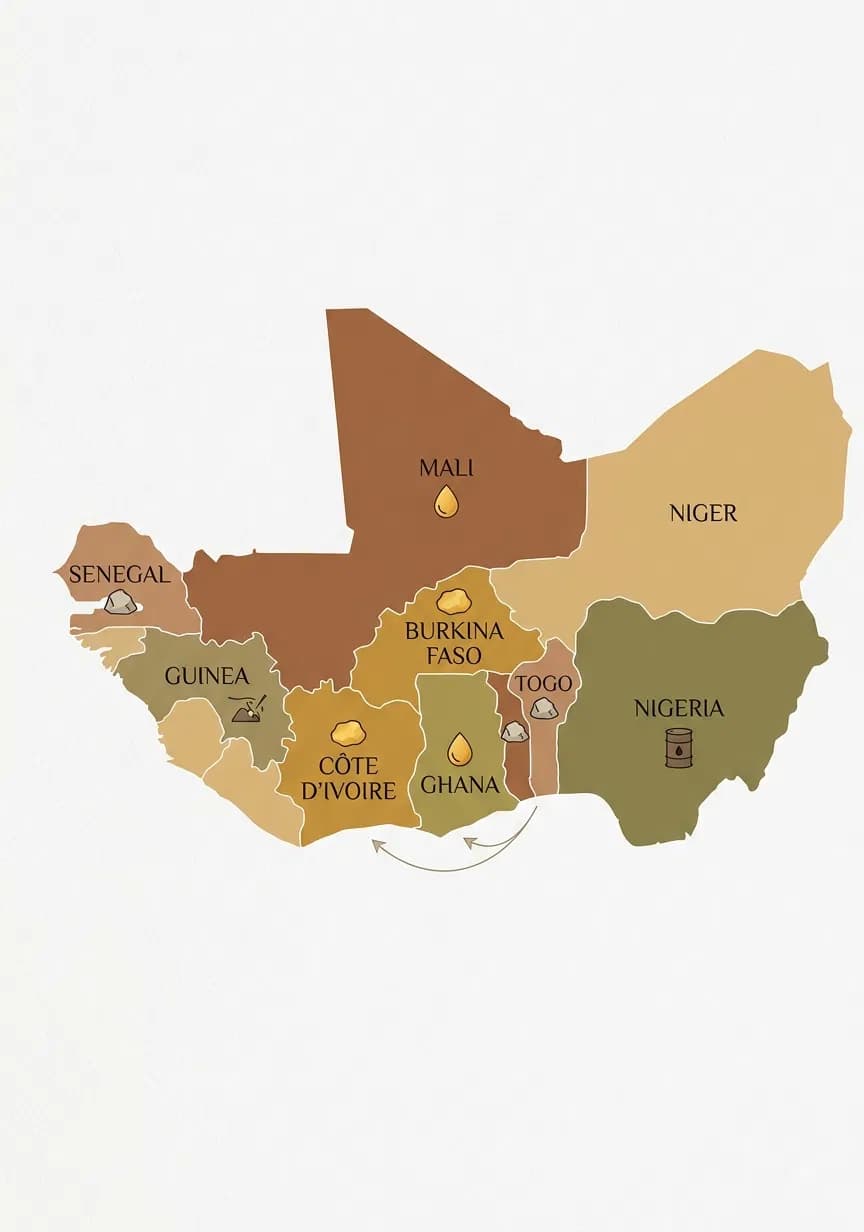
Second, and this is the heart of what I want to argue here, what I have observed in the field is that local savings are almost never an isolated activity. They are the entry point into something much larger: it is around the fund that information circulates about what is happening in the neighboring village, about suspicious movements, about tensions emerging between communities. The women who manage these funds are often the first to pick up on the weak signals of eroding social cohesion, well before that reaches anyone else, and well before any institutional early warning mechanism catches on. This is no coincidence. The regularity of meetings, the closeness among members, the need to know each member’s situation in order to arbitrate payouts, all of this produces a continuous flow of information that makes the fund a social sensor before it is a financial tool. Local savings become, without ever having been designed for it, a form of community watch in the fullest sense, with its own observation frequency, its own relays, its own capacity to detect a shift in behavior before it escalates. This observation does not stop at savings funds. I make the same observation about cooperatives, particularly those I have been able to observe through artisan networks active across several West African countries. A cooperative runs on the same logic as a tontine fund: regular meetings, economic interdependence among members, a constant circulation of information about each member’s difficulties, about the movement of raw materials, about tensions in production or supply zones. As such, cooperatives too function as genuine early warning committees, informal but structured, picking up signals that formal mechanisms often take weeks to identify, when a supply disruption reveals a road blockage, a land conflict, or rising insecurity long before any official report mentions it. There is also a dimension I find essential and that tends to be overlooked: local savings restore to women a form of authority in decision-making spaces from which they are otherwise often excluded. Managing a fund, arbitrating payout priorities, deciding who receives emergency support, these are acts of governance, modest in scale but real. When a community goes through a crisis, whether economic, security-related, or both at once, it is frequently these structures that absorb the initial shock, well before formal social protection mechanisms are activated, if they ever are. This capacity for immediate absorption has a value we do not measure enough, precisely because it fits into no budget line, no project indicator.
That said, I do not want to fall into a naive celebration of the informal over the formal. Local savings, like cooperatives, have their limits, and I think those limits should be named clearly rather than kept quiet for the sake of advocacy consistency. These structures remain small in scale, vulnerable to covariant shocks, meaning crises that hit all members at the same time, in which case the mutualization mechanism collapses since no one has any surplus left to contribute, nor any reassuring information left to share. They also rest on trust relationships that can break down, particularly when power dynamics come into play. And above all, they cannot, on their own, substitute for public social protection policy or for a genuine security infrastructure.
This is why I believe in articulation rather than a choice between the two. What local savings offer is not an alternative to formal early warning mechanisms, but a layer of observation that complements them and that, often, picks up the signal before they do. A public policy seeking to connect these mechanisms to existing warning systems, rather than ignoring them or trying to replace them with structures modeled on conventional banking, would gain in responsiveness without having to build a new sensor network from scratch. It would mean recognizing what these groups already do well, seeing things coming, and giving them the means to pass on what they see, for instance through a simple reporting channel to local authorities, or through formal recognition of their role within community monitoring systems.
What my field experience has taught me above all is that we should not wait for a crisis to become visible before paying attention to what precedes it, and that we have often looked for that early signal in the wrong place, in committees set up for the occasion, when it was already circulating, week after week, around a fund run by women no one ever thought to consult. This is how, I believe, we now need to look at local savings: no longer only as resilience, but as a warning we can no longer afford to ignore.

Commenter
Les commentaires sont examinés avant publication.