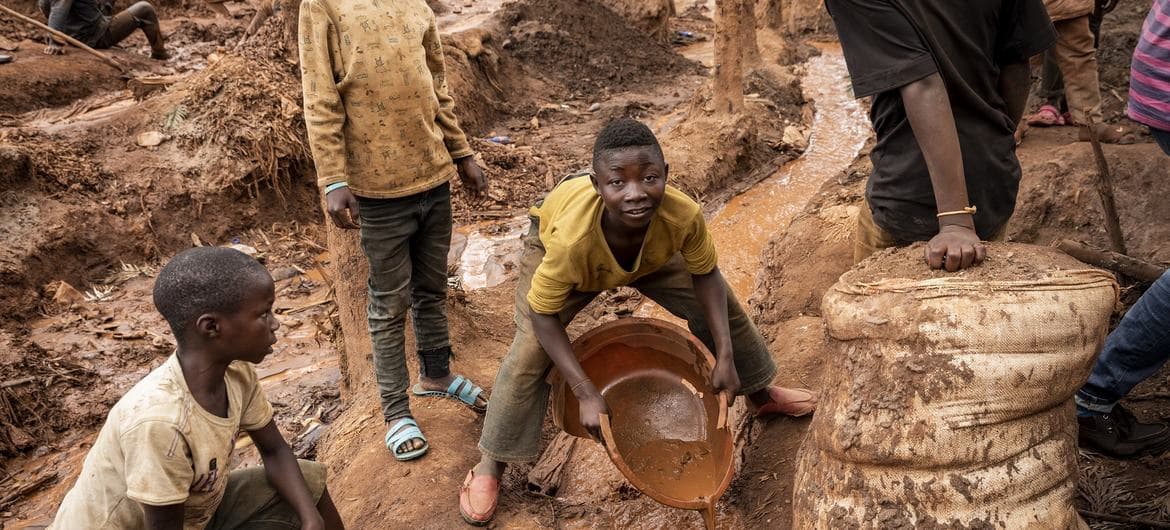
There is, in West Africa, a kind of extractive cacophony. On one side, artisanal gold mining sites proliferate beyond state control, escaping any fiscal or environmental traceability. On the other, the same states legally issue permits for sand, phosphate, oil, or even gold when it is extracted industrially. Two opposing legal regimes, yet the same result on the ground: polluted groundwater, degraded land, sickened populations living nearby. The legality of an activity seems to determine neither its environmental cost nor its human cost. It only determines who can, in theory, be held accountable, and that may be where the real question lies.
A Generation Without Prospects, a Mining Magnet
The starting point of the phenomenon is economic. In several countries of the subregion, formal employment remains structurally insufficient to absorb a large rural youth population. Faced with this impasse, artisanal mining sites function less as a professional choice than as a survival outlet, one of the few economic horizons immediately accessible to young people with no job and no prospects. In Burkina Faso as in Mali, Côte d'Ivoire, Ghana, or Niger, several hundred thousand people are thought to depend, directly or indirectly, on artisanal gold mining for their subsistence.
This attraction produces an exodus that takes two distinct forms. The first is cross-border and regional. In several rural areas of the subregion, already weakened by poverty and, in some cases, by insecurity affecting border regions, men and women leave for the gold sites of Ghana or Côte d'Ivoire, sometimes for years, sometimes without ever returning or being heard from again. The second form of mobility is internal, within the very countries that hold the deposits. At the Sabouri site, in the Mané commune of Burkina Faso, workers most often come from rural areas of the country itself and organize around a structured parallel economy, complete with its own local authority, businesses, and community life. In both cases, the driving force is the same: an economic gap between impoverished countryside and pockets of mining activity, wherever they may be found.
The Price Paid by the Families Left Behind
The social cost of this exodus is felt first in the households left behind. Documented cases across several countries in the region point to a rise in de facto single-parent households, a clear marker of this phenomenon. Spouses who left to search for gold sometimes never return, or only after years of silence. Those who stay, women or men, must then take on the burden of raising children alone, sometimes reversing traditional domestic roles. Some children are pulled out of school for lack of resources and redirected toward shorter vocational tracks. Others, elsewhere in the region, are employed directly on mining sites themselves, a reality documented in several producing countries. Money earned from gold mining sometimes builds a house or funds a small business, but the economic gamble of leaving can also end in impoverishment, illness contracted on site, or an absence that never ends.
A Disaster That Does Not Stop at the Family
Far from being only a social phenomenon, artisanal gold mining is also, and perhaps above all, an environmental one. The land left behind by agricultural labor is often the same land poisoned by mining activity itself, inflicting a kind of double blow on the areas concerned. In Côte d'Ivoire, for example, several rivers and their tributaries are now contaminated by substances such as cyanide and mercury used in artisanal ore processing. Fish stocks are dwindling, groundwater in certain localities is affected, and farmland ends up both riddled with excavation pits and rendered sterile by the toxic substances dumped into it. This finding, documented for Côte d'Ivoire, is far from isolated: it recurs, with local variations, across most of the subregion's major artisanal gold basins.
When Legality Protects No One
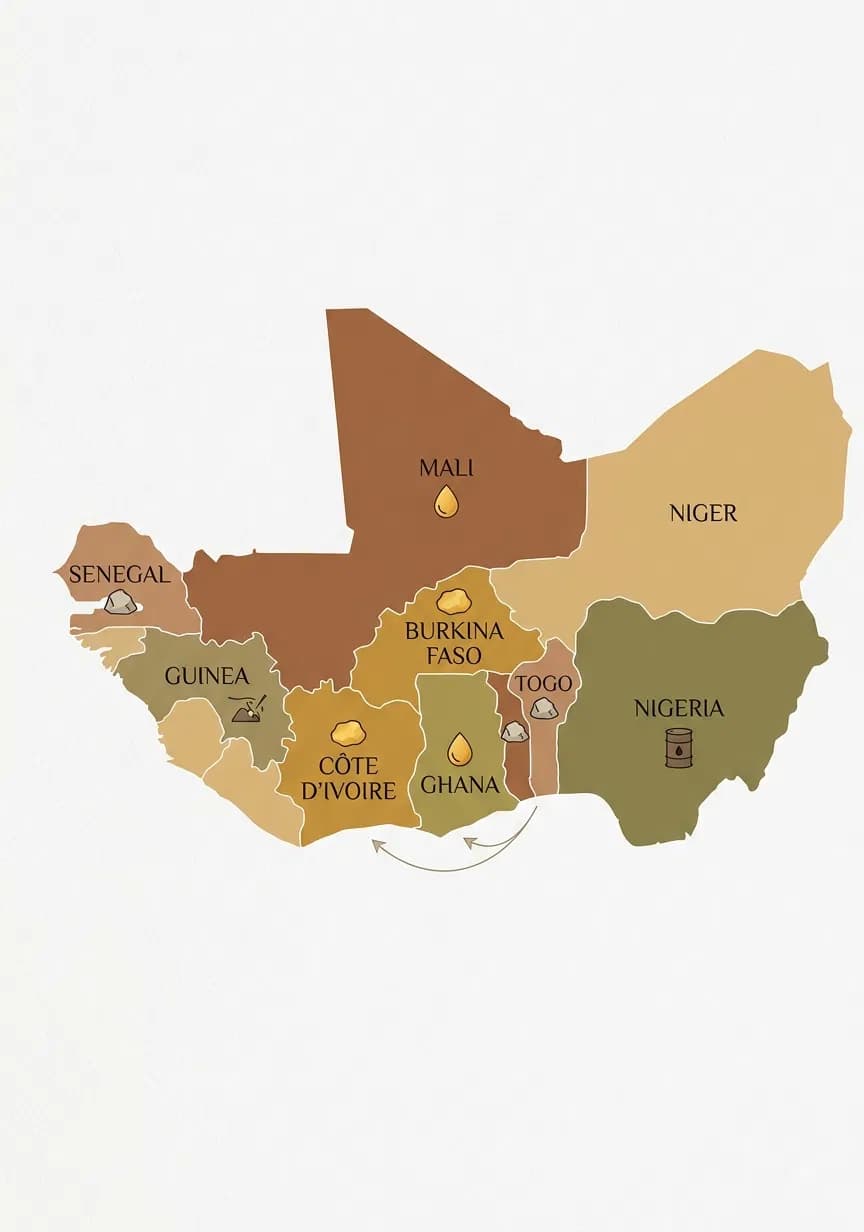
This is where the lens must widen beyond artisanal gold. Informal extraction does not hold a monopoly on environmental damage. Sand, phosphate, oil, or gold itself when mined industrially under permit, are subject in several countries of the region to properly issued state authorizations. Oil extracted in the Niger Delta has illustrated for decades the scale that environmental and health damage can reach even under a perfectly legal operation. West Africa's phosphate industry, whose Senegalese case around Taïba is long documented, likewise shows how an authorized activity can durably affect soil, water, and the health of surrounding populations. Togo is no exception to this regional reality, with its own phosphate sector fitting the same overall pattern, without needing further elaboration to grasp the scope of the problem.
The difference between these two regimes, informal and formal, therefore lies not in the scale of the damage but in the accountability each entails. An illegal operation can, at a stretch, invoke the state's inability to control it. A legal operation deprives the state of that excuse, since it authorized the activity knowingly.
At What Price, and for Whom?
This brings us back to the question posed in the title. Neither legal nor informal status appears, in practice, to protect the populations living near these sites, or the territories that host them. Regulatory attempts do exist: crackdowns on clandestine gold mining, tightened royalty regimes, campaigns to shut down illegal sites. But these measures, sporadic and often reactive, are visibly not enough to stem a phenomenon rooted above all in structural economic precarity, itself far older than the rush toward any given resource. As long as that precarity remains the main driver of extraction, legal or informal, the question of its price will keep resurfacing, unresolved, with every new resource found beneath West African soil. There is, in this, an invitation to advocacy organizations and public decision-makers alike to ensure that the revenue drawn from these operations finally serves the fundamental rights of the populations bearing its heaviest cost.

Commenter
Les commentaires sont examinés avant publication.